
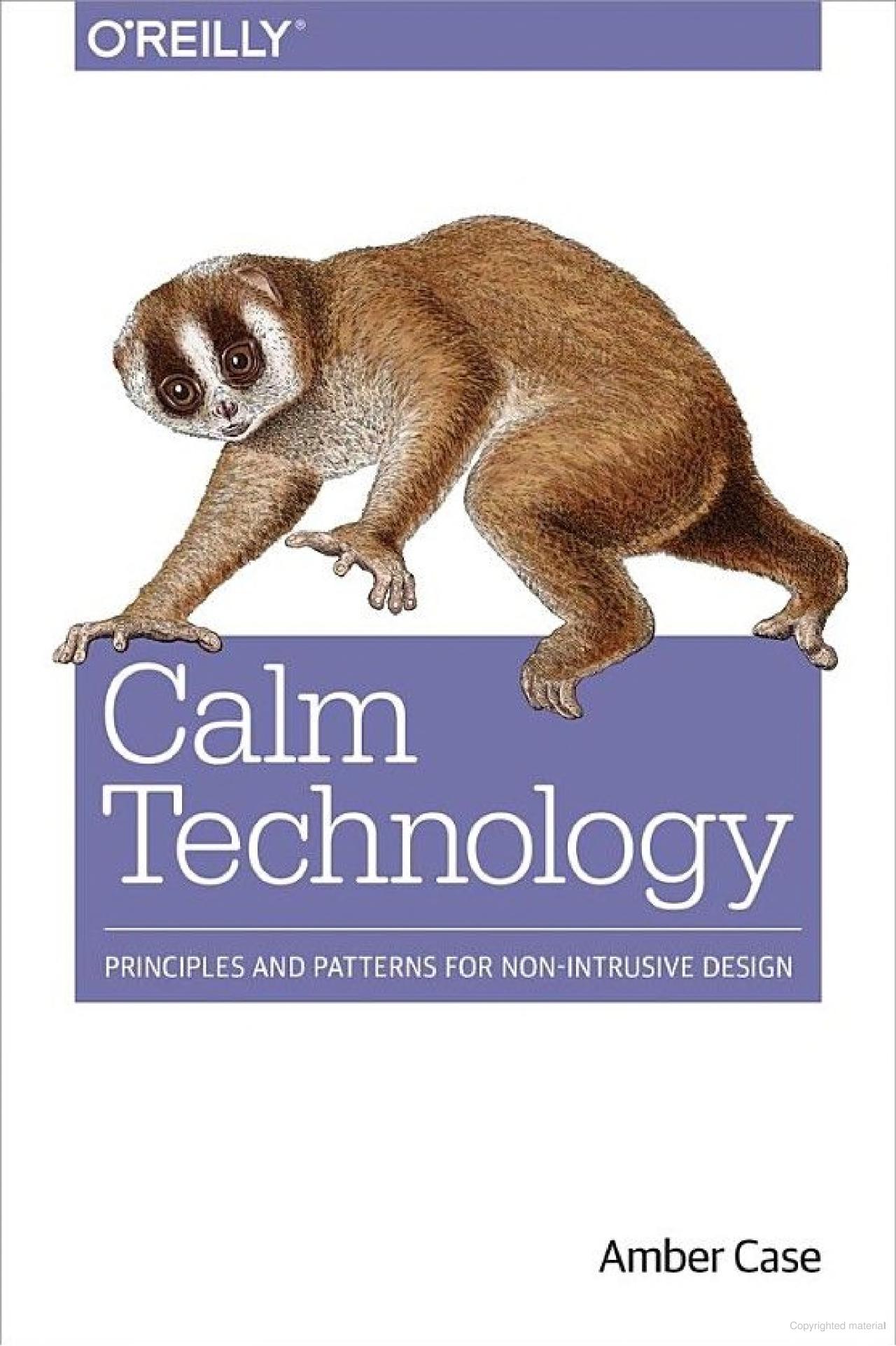
Calm Technology: Principles and Patterns for Non-Intrusive Design
How can we design technology that becomes a part of a user's life and not a distraction from it? This practical book explores the concept of calm technology, a method for smoothly capturing a user's attention only when necessary, while calmly remaining in the background most of the time.
Author Amber Case expands on ideas first introduced by researchers at Xerox PARC in 1995 with a series of principles, patterns and examples of how they apply to our current technology landscape, especially the Internet of Things.
This book is ideal for UX and product designers, managers, creative directors, developers, and anyone that cares about making products that exist alongside humans in a state of harmony.
Topics:
Purchase:

Designing with Sound: Fundamentals for Products and Services
Sound can profoundly impact how people interact with your product. Well-designed sounds can be exceptionally effective in conveying subtle distinctions, emotion, urgency, and information without adding visual clutter. In this practical guide, Amber Case and Aaron Day explain why sound design is critical to the success of products, environments, and experiences.
Just as visual designers have a set of benchmarks and a design language to guide their work, this book provides a toolkit for the auditory experience, improving collaboration for a wide variety of stakeholders, from product developers to composers, user experience designers to architects. You'll learn a complete process for designing, prototyping, and testing sound.
In two parts, this guide includes:
Purchase:
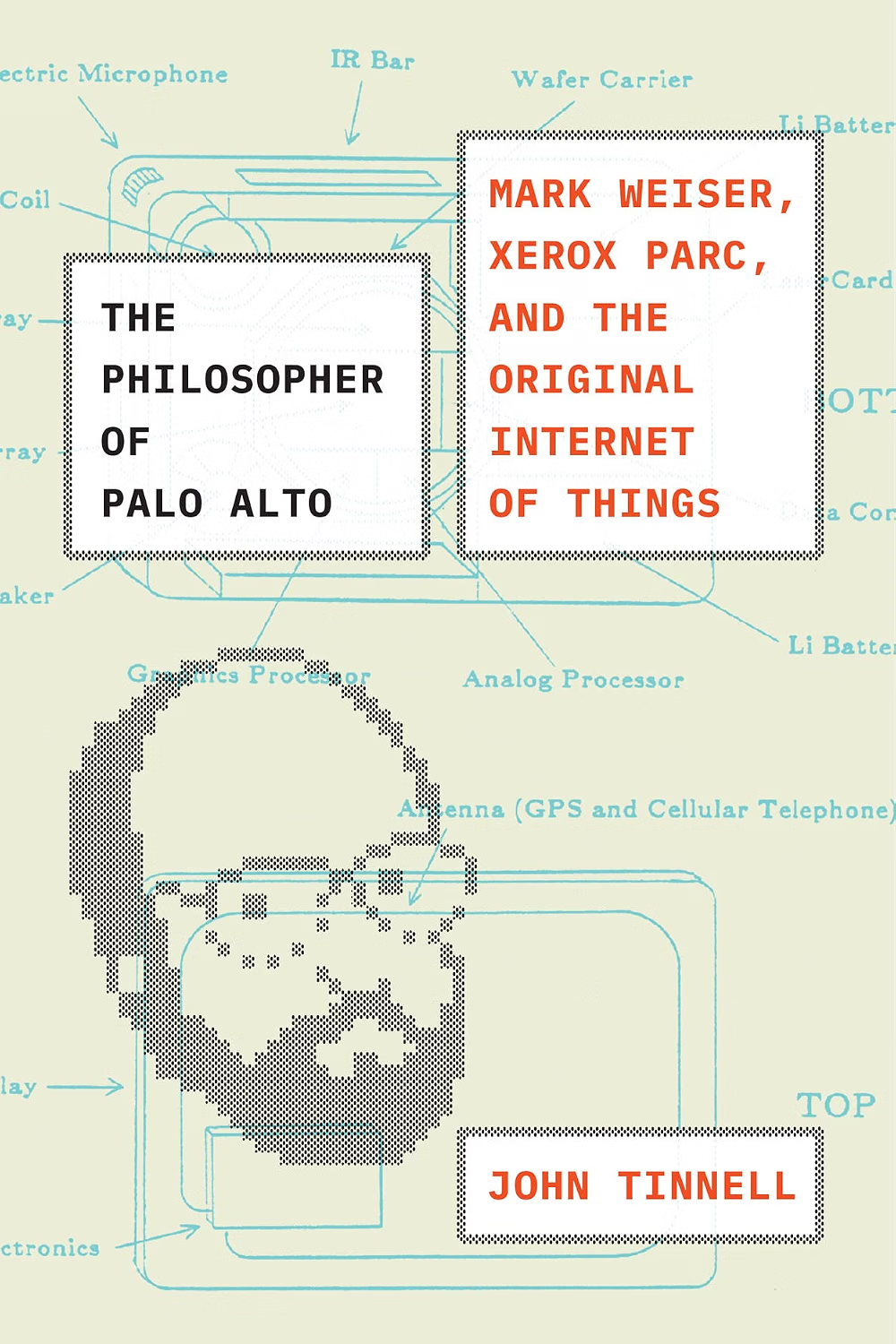
The Philosopher of Palo Alto: Mark Weiser, Xerox PARC, and the Original Internet of Things
By John Tinnell
Informed by deep archival research and interviews with Weiser's family and colleagues, The Philosopher of Palo Alto chronicles Weiser's struggle to initiate a new era of computing. Working in the shadows of the dot-com boom, Weiser and his collaborators made Xerox PARC headquarters the site of a grand experiment. Throughout the building, they embedded software into all sorts of objects—coffeepots, pens, energy systems, ID badges—imbuing them with interactive features. Their push to integrate the digital and the physical soon caught on. Microsoft's Bill Gates flagged Weiser's Scientific American article "The Computer for the 21st Century" as a must-read. Yet, as more tech leaders warmed to his vision, Weiser grew alarmed about where they wished to take it.
Purchase: